

For a long time, the jewelry industry sold one idea of a perfect stone. Colorless diamond. Clean inside. Blue, if it was a sapphire. Anything else got labeled flawed or off-color and quietly sold for less.
That idea is loosening. More people come into our LoHi studio asking for stones with something going on inside them: a diamond full of dark flecks, a diamond the color of whiskey, a sapphire that can't decide between blue and green. These happen to be three of my favorite materials to work with, so here is what they actually are, what to look for when you're choosing one, and why I think they're more than a trend.
What Is a Salt and Pepper Diamond?
A salt and pepper diamond is a natural diamond with a lot of visible inclusions, the tiny crystals, clouds, and fractures that got trapped inside while it formed. The dark specks are the pepper. The white, cloudy ones are the salt. Together they make the stone read gray, speckled, sometimes almost smoky.
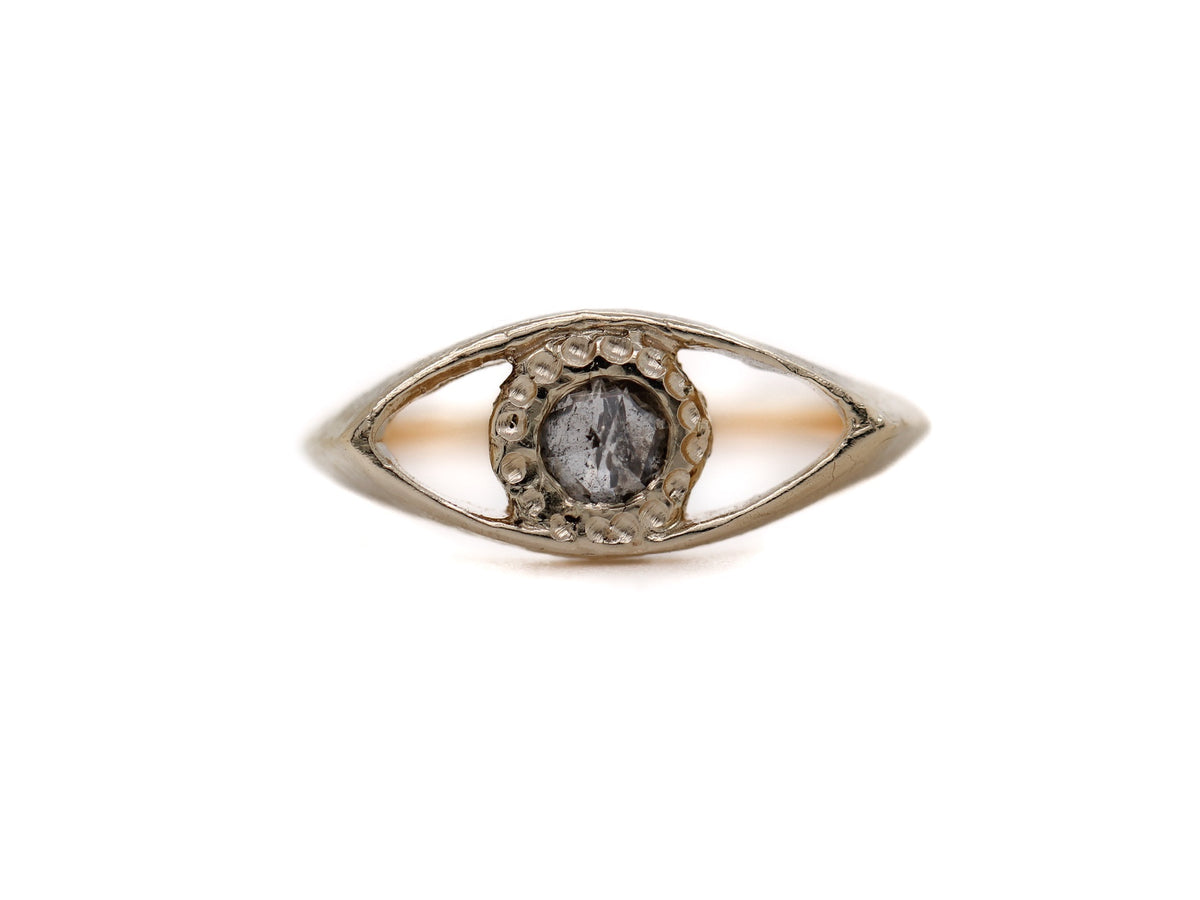
On the traditional diamond clarity scale, these stones would land near the very bottom. That's sort of the point. Nobody chooses one hoping it looks clean. You choose it for the pattern, and no two patterns repeat. Some look like weather. Some look like a night sky with salt spilled across it. In our Diamond Eye Ring, a rose-cut salt and pepper diamond becomes the iris, and its inclusions read almost like the flecks in a real eye.
Diamond is still the hardest natural material, so a salt and pepper diamond holds up well to daily wear. Heavy inclusions can be a weak point, though, especially ones that reach the surface, if the stone takes a hard knock. Bezel settings, which wrap the stone in a thin wall of gold, are a good match for that reason, particularly in an engagement ring you'll wear every day.

They also tend to cost less per carat than colorless diamonds, which puts larger stones and more unusual cuts within reach. Shape matters here. Hexagons, kites, and flat rose cuts show off the inclusions in ways a standard round brilliant can't. This 1.82 carat hexagon step cut, mined at Gahcho Kué in Canada's Northwest Territories, is a good example. The long, flat facets work like a window into the stone.

Rose cuts are especially good at this. They're flat on the back and domed on top, so they glow more than they sparkle. In our one-of-a-kind diamond drop disc earrings, two kite-shaped rose-cut salt and pepper diamonds point in opposite directions on hand-textured gold.
Champagne Diamonds: Brown, Warm, and Underrated
"Champagne" is the trade's prettier word for a brown diamond. Lighter stones sit in straw and honey tones. Deeper ones usually go by cognac or chocolate.
Brown is one of the most common natural diamond colors, and much of it comes from tiny distortions in the crystal structure that formed under pressure deep in the earth. For decades the industry treated brown diamonds as industrial grade or simply unfashionable. Australia's Argyle mine, a major source of them until it closed in 2020, helped change that by selling them as something to wear on purpose.
What I love most is how they behave next to gold. In yellow or rose gold, a champagne diamond looks less like it's sitting in a setting and more like it grew there. The sparkle is softer than a white diamond's, with flashes of amber and bronze instead of icy white.
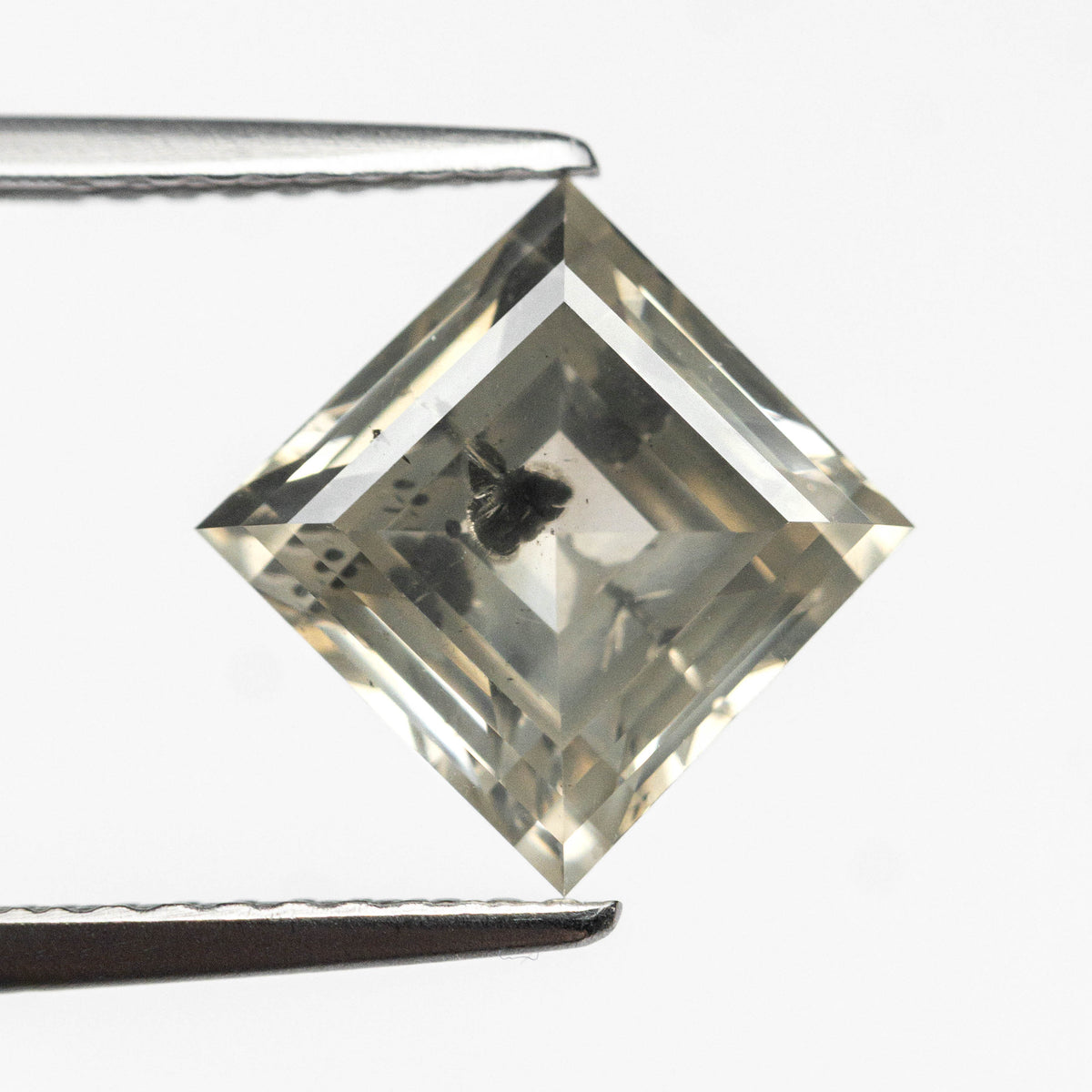
The two categories also overlap. Some salt and pepper diamonds carry a warm brown body color under all those inclusions, and they're often sold as champagne salt and pepper. This 2.99 carat carré step cut is one of them: smoky and speckled, but warm all the way through.
They're a practical choice, too. Champagne diamonds are typically priced well below colorless diamonds of a similar size. If you want to see one small and simple, our champagne diamond mini shield ring is a good place to start.
Unusual Sapphires: Teal, Parti, Peach, and Everything Past Blue
Sapphire is a single mineral, corundum, and it comes in nearly every color. Red corundum gets its own name (ruby). Every other color is sapphire, and trace elements in the crystal decide which shade you end up with. GIA's sapphire guide is a good rabbit hole if you want the full science.
A few we can't stop collecting:
Teal sapphires sit somewhere between blue and green and can lean either way depending on the light. Many come from Australia and Montana, where sapphires have been mined since the 1800s.

Parti sapphires hold two or more distinct colors in a single stone, often yellow and green or blue and yellow, in bands or patches. Each one looks like a tiny landscape.

Peach, lavender, and gray sapphires are softer and more muted. They look especially good in warm gold.
Sapphire ranks 9 on the Mohs hardness scale, just below diamond, which makes it one of the best colored stones for a ring you plan to wear every day.
One thing worth asking about is treatment. Most sapphires on the market are heated to improve their color, a long-accepted and stable practice. Unheated stones exist and usually cost more. The teal hexagon above is heated. The teal-green parti kite is not. Either is fine. You should just know which one you're getting.
You can browse more loose stones in our Misfit Sapphires and Misfit Diamonds collections.
How to Choose a Stone That Isn't Trying to Be Perfect
Shopping for an unconventional gemstone works differently than shopping for a white diamond. Grading reports help less, because the things that make these stones interesting don't fit neatly on a scale.
See it in person if you can. Photos flatten inclusions and shift color, especially with teal and parti sapphires. Look at a stone in daylight and indoor light before you decide.
Let the stone shape the design. A long, cloudy kite might want a bezel. A champagne diamond might want warm yellow gold. A parti sapphire might want a setting open enough to show both colors. Designing around a stone's quirks is where custom work gets fun.
Notice which one you keep going back to. If you've looked at twenty sapphires and keep scrolling back to the strange green one, that's probably your answer.
Why These Stones Are Having a Moment
Some of it is practical. Alternative stones often cost less than a colorless diamond of the same size, and people are thinking harder about where their money goes. Some of it is wanting an engagement ring that doesn't look like everyone else's.
But I think the bigger reason is meaning. Jewelry marks things: a marriage, a loss, a birthday, a version of yourself you want to remember. It makes sense that people want the stone itself to feel personal too. A salt and pepper diamond for someone who likes complicated things. A champagne diamond because it's the color of the ring your grandmother wore. A teal sapphire because it matches a lake you swam in once and never forgot.
None of these stones are trying to be perfect. That's a big part of why they're so easy to love.
Frequently Asked Questions
Are salt and pepper diamonds real diamonds?
Yes. They're natural diamonds with a high number of visible inclusions. Their chemistry and hardness are the same as any other diamond.
Are salt and pepper diamonds good for engagement rings?
Yes, with a little thought about the setting. A bezel or other protective setting helps guard heavily included stones against hard knocks.
Are champagne diamonds natural?
Most champagne diamonds get their color naturally. Some brown diamonds on the market are treated or lab-grown, so it's always fair to ask a jeweler for disclosure.
What's the difference between a teal sapphire and a parti sapphire?
A teal sapphire is one blended color between blue and green. A parti sapphire shows two or more separate colors within the same stone.
Can you design a custom ring around a stone I already have?
Yes. We work with clients' own stones and inherited jewelry all the time. Learn about our custom design process.
See Them in Person in Denver
Finished pieces live in our Ready to Ship collection, and loose stones are available for custom work. Better yet, come see them in person at our studio at 1600 Boulder Street in Denver's LoHi neighborhood, open Thursday through Saturday from noon to 6, and Wednesdays by appointment.
Bring the stone you can't stop thinking about, or come find one.


